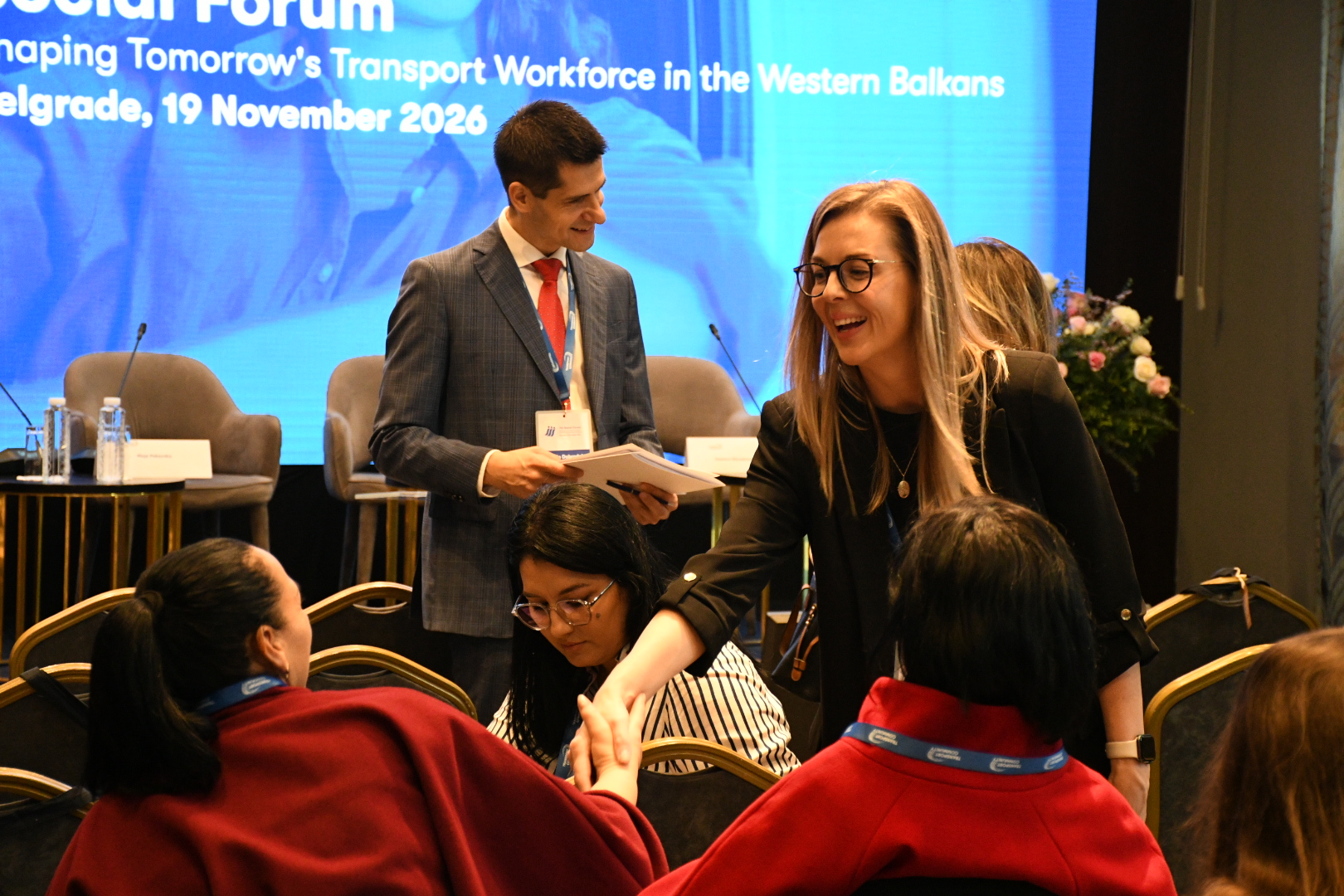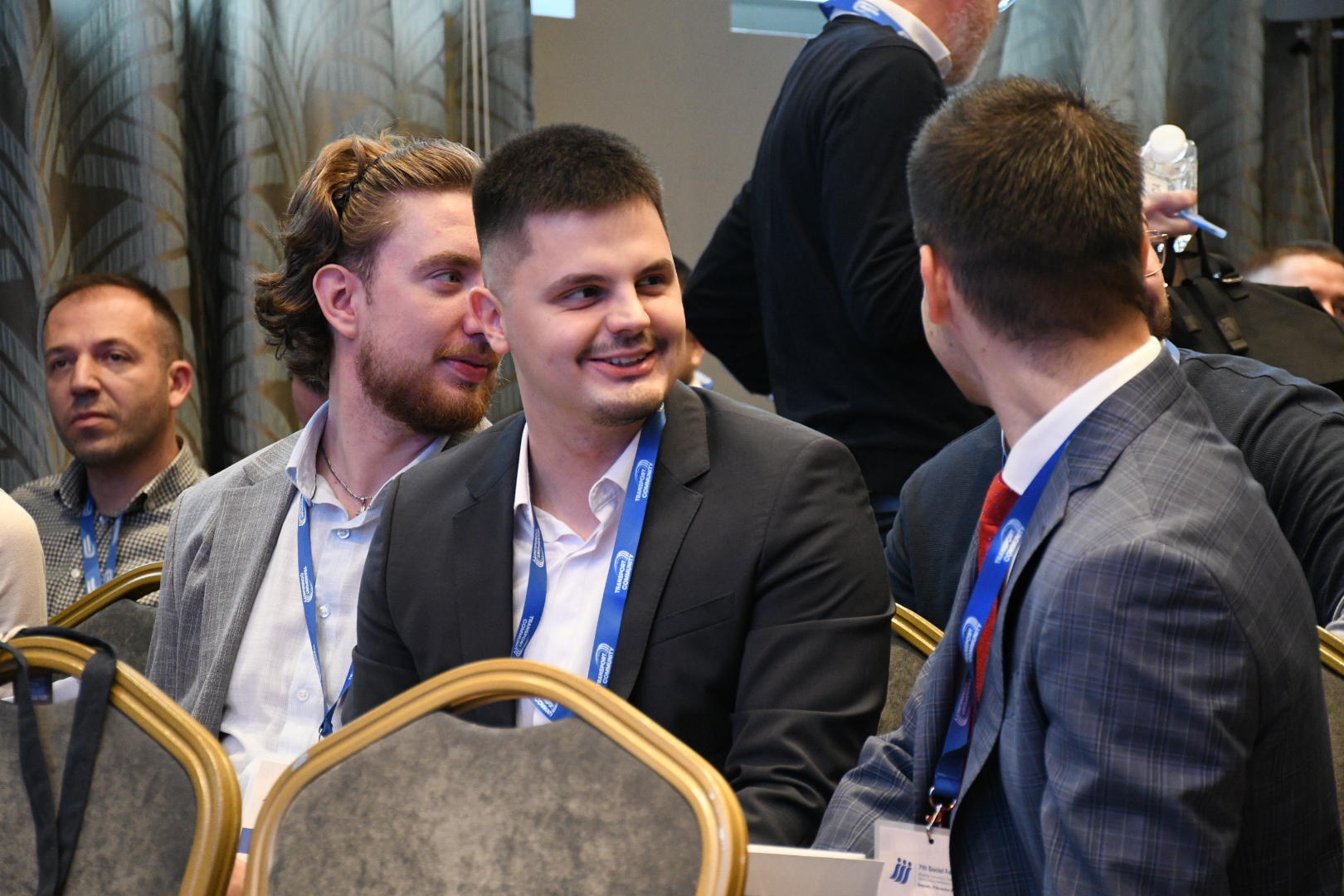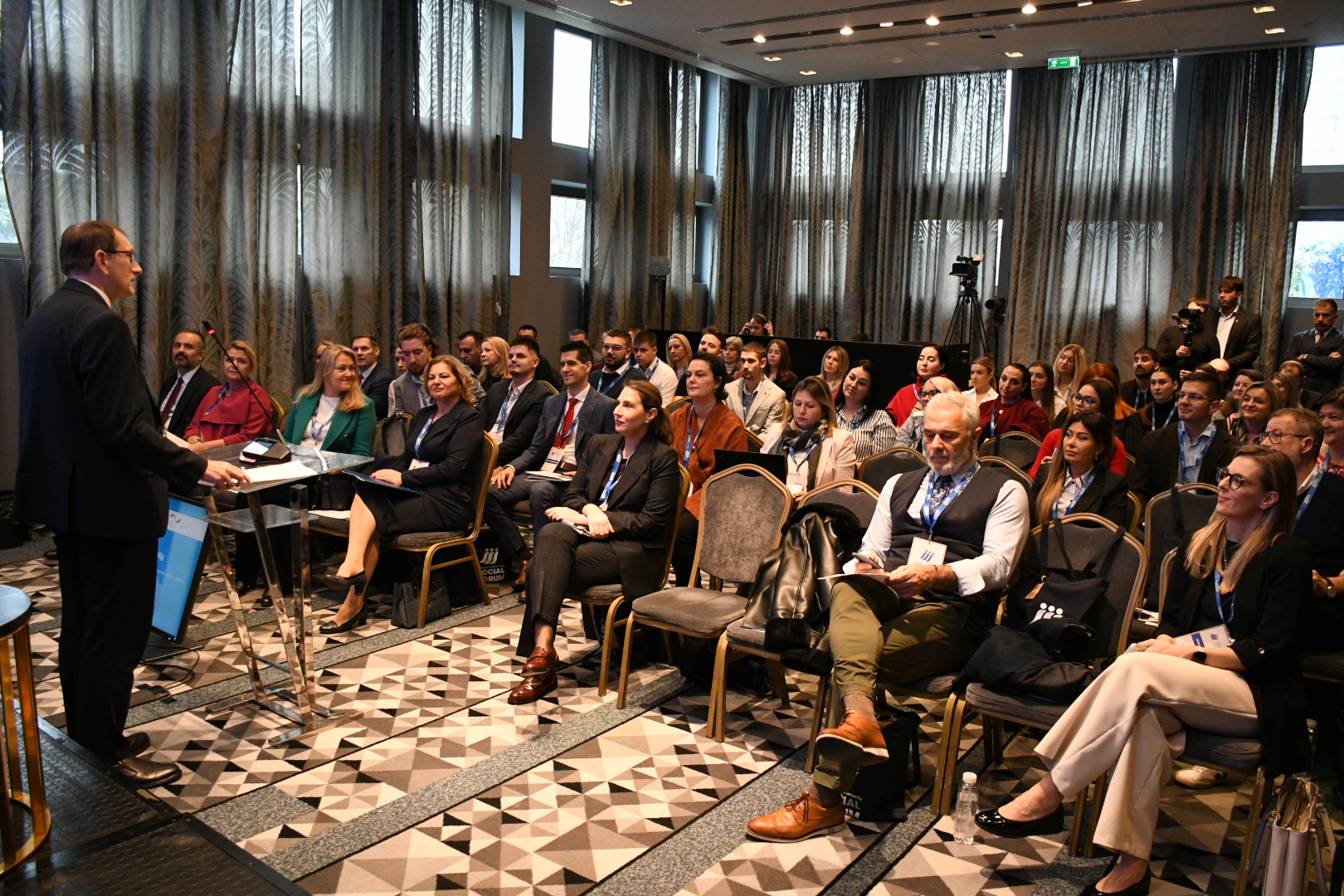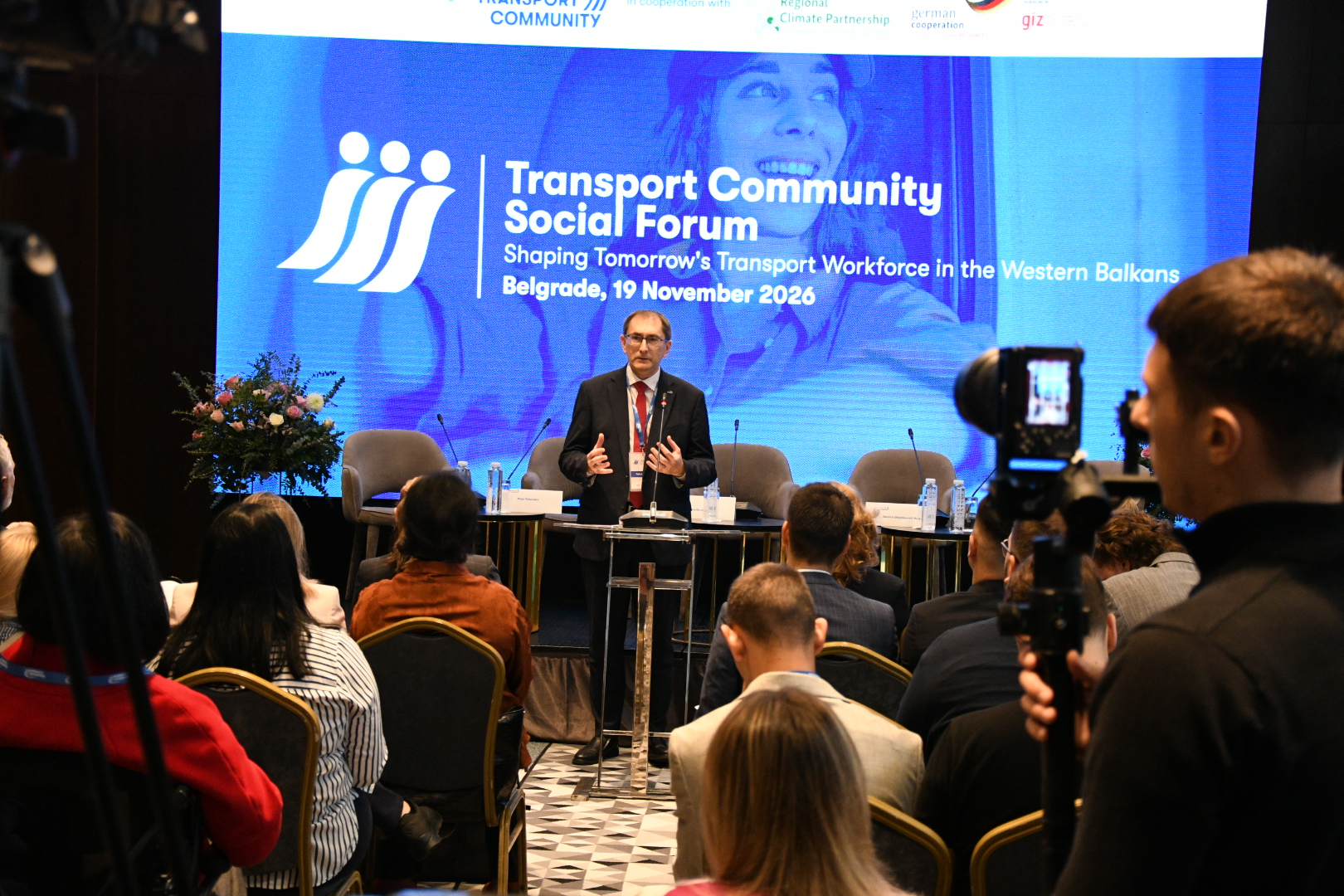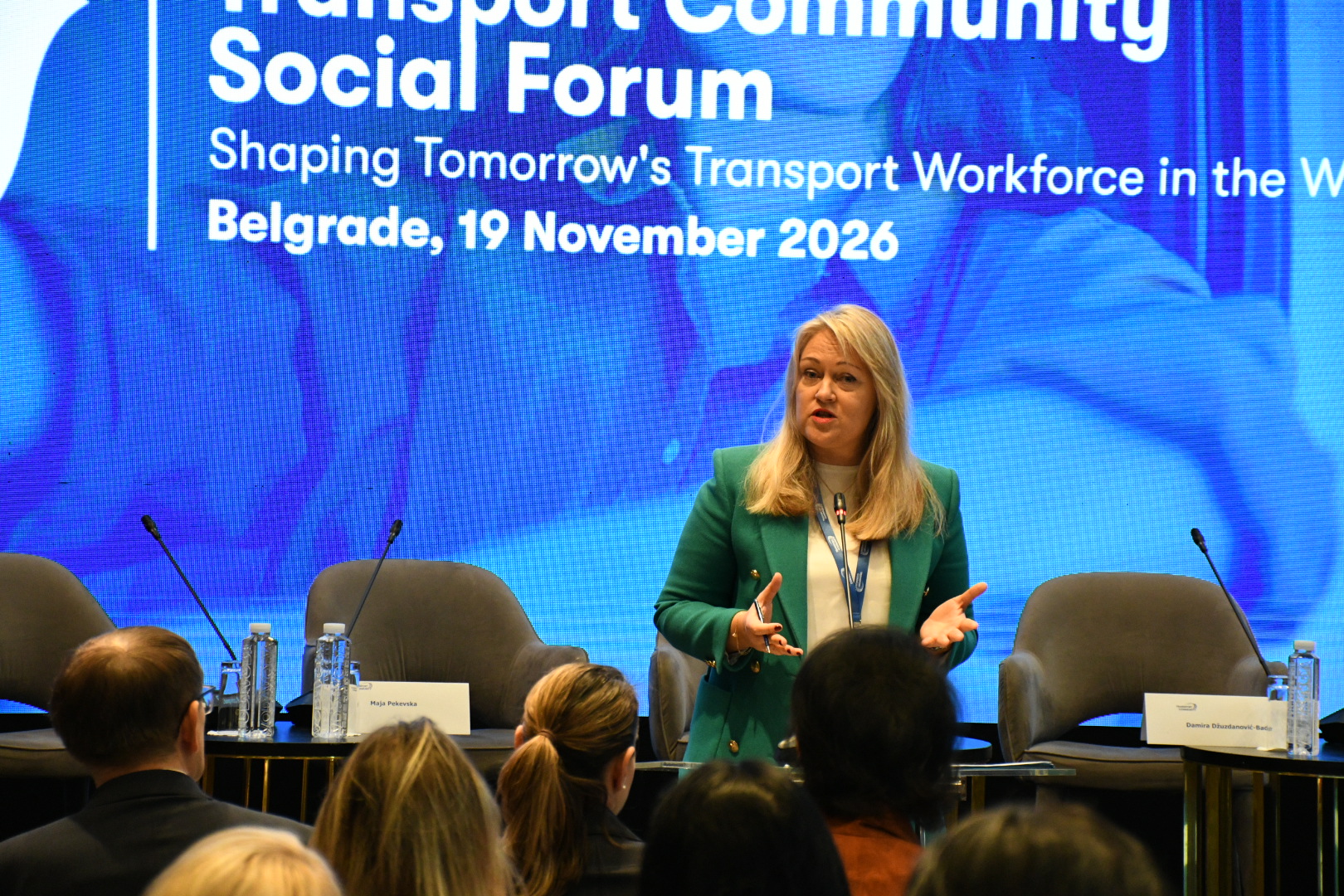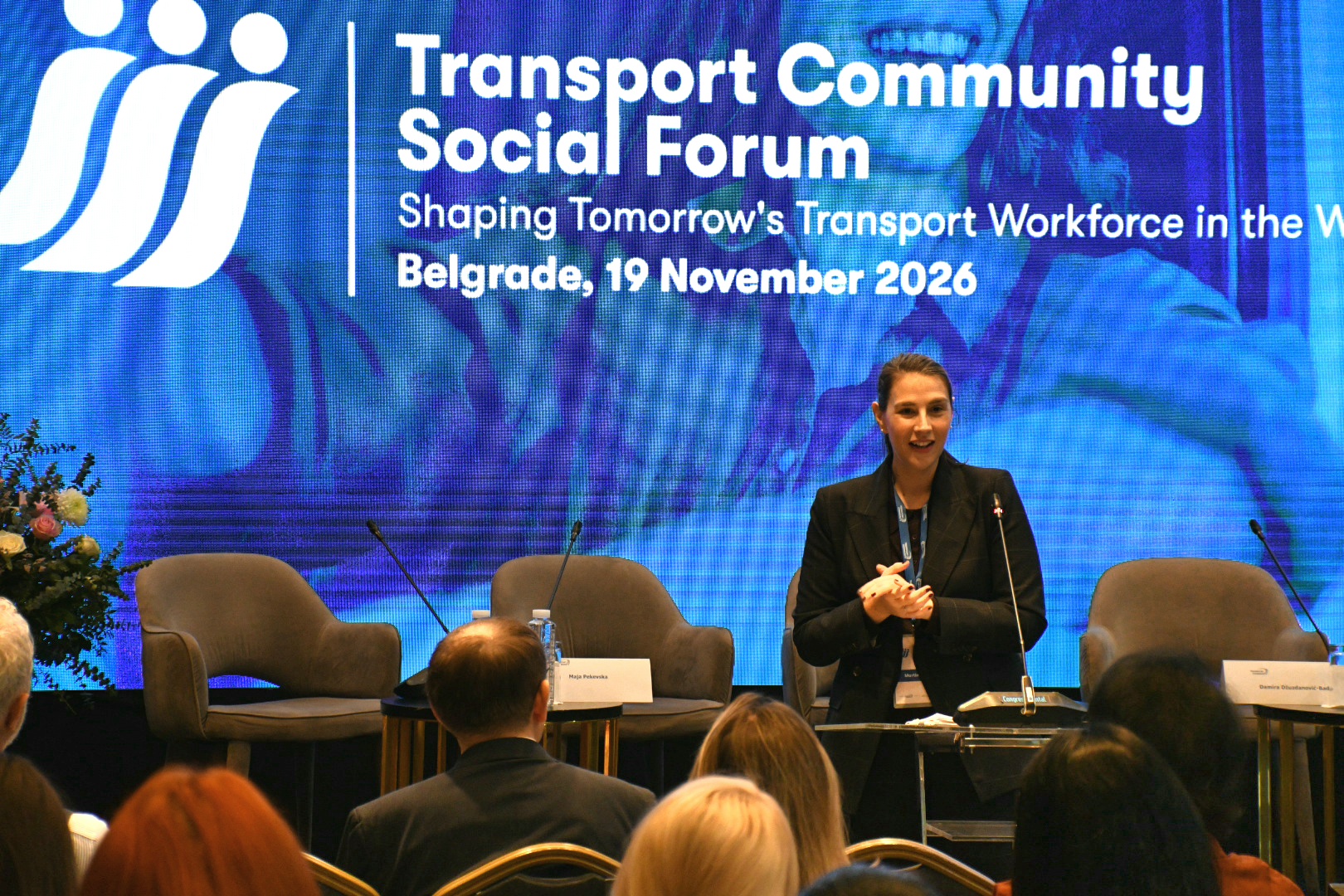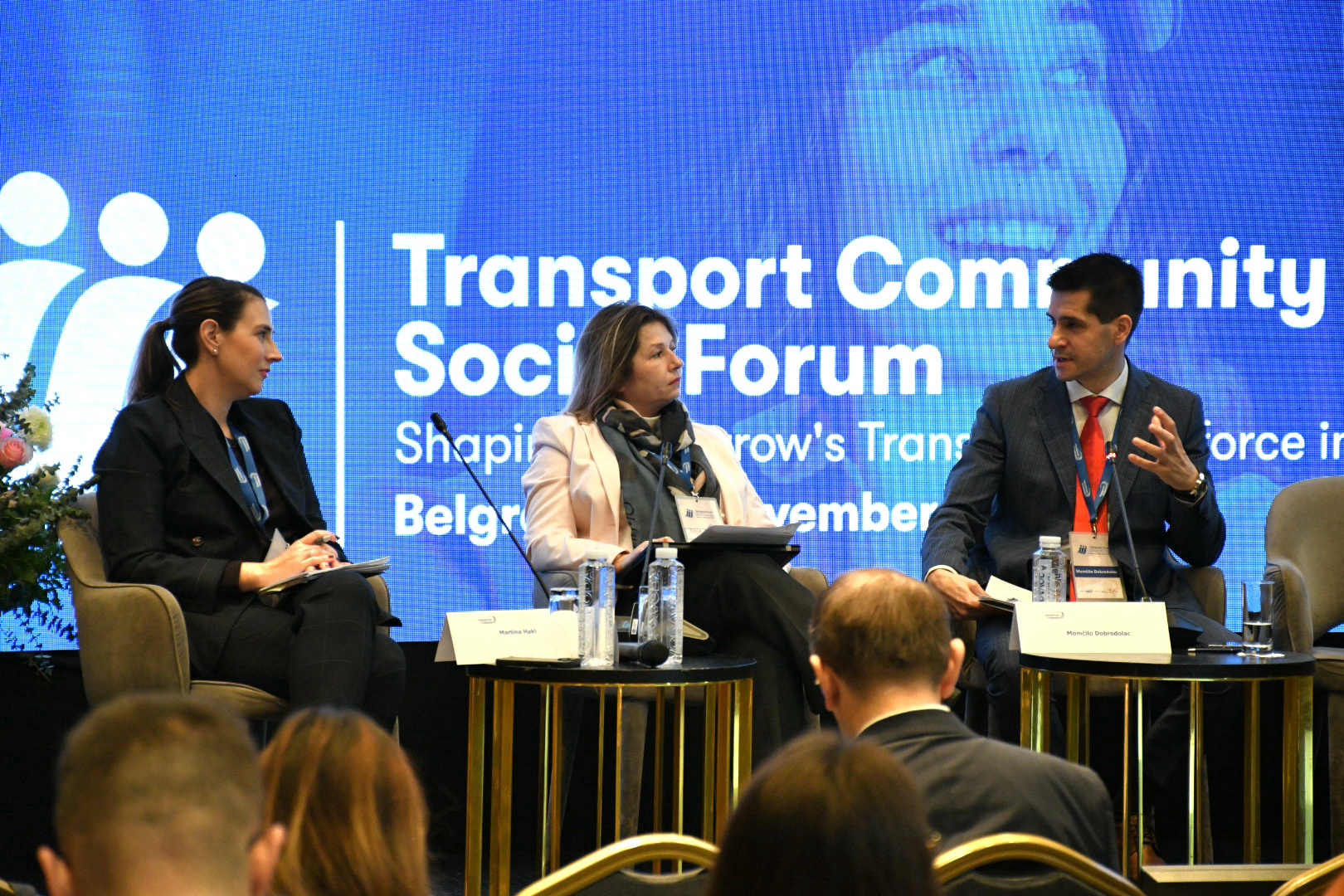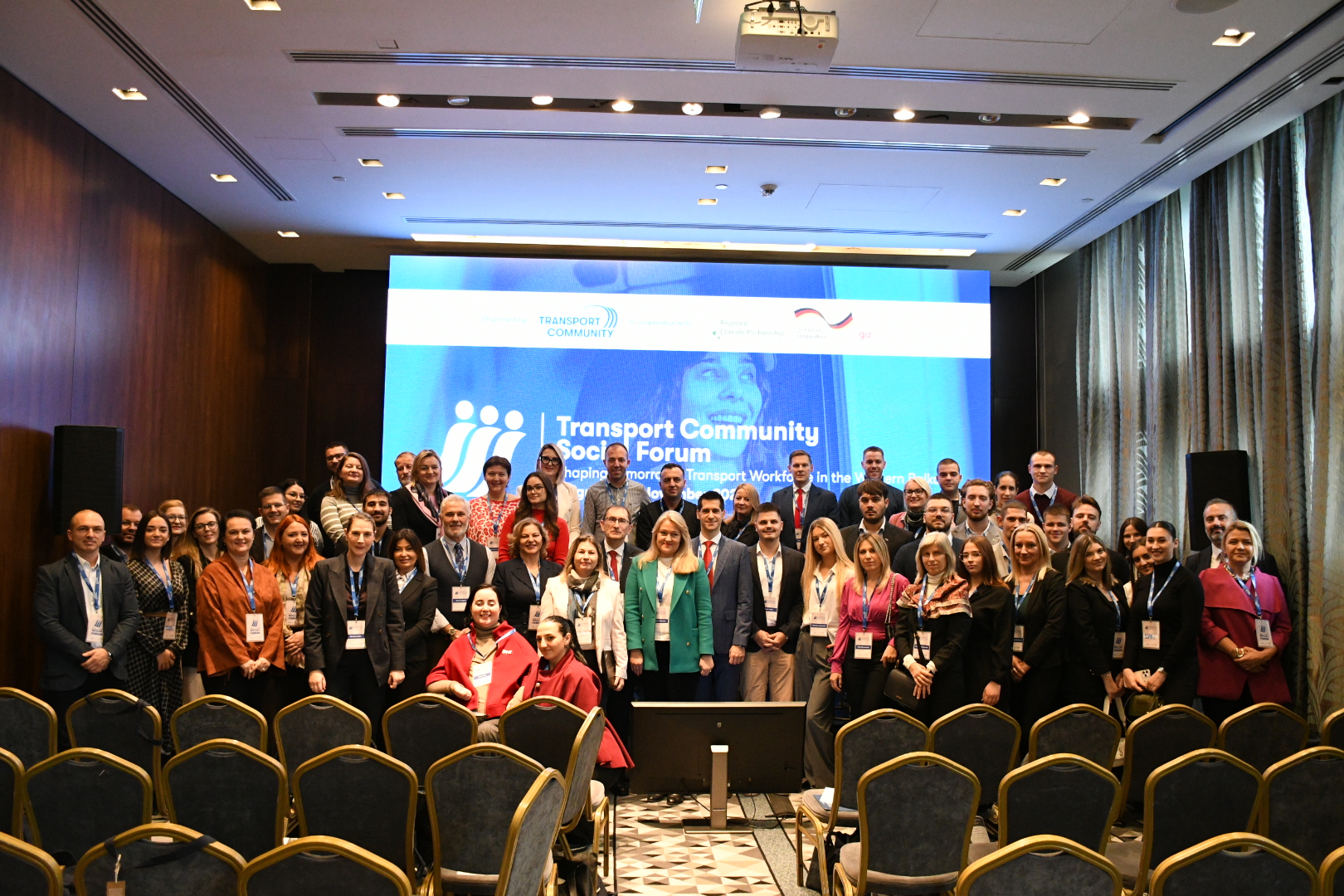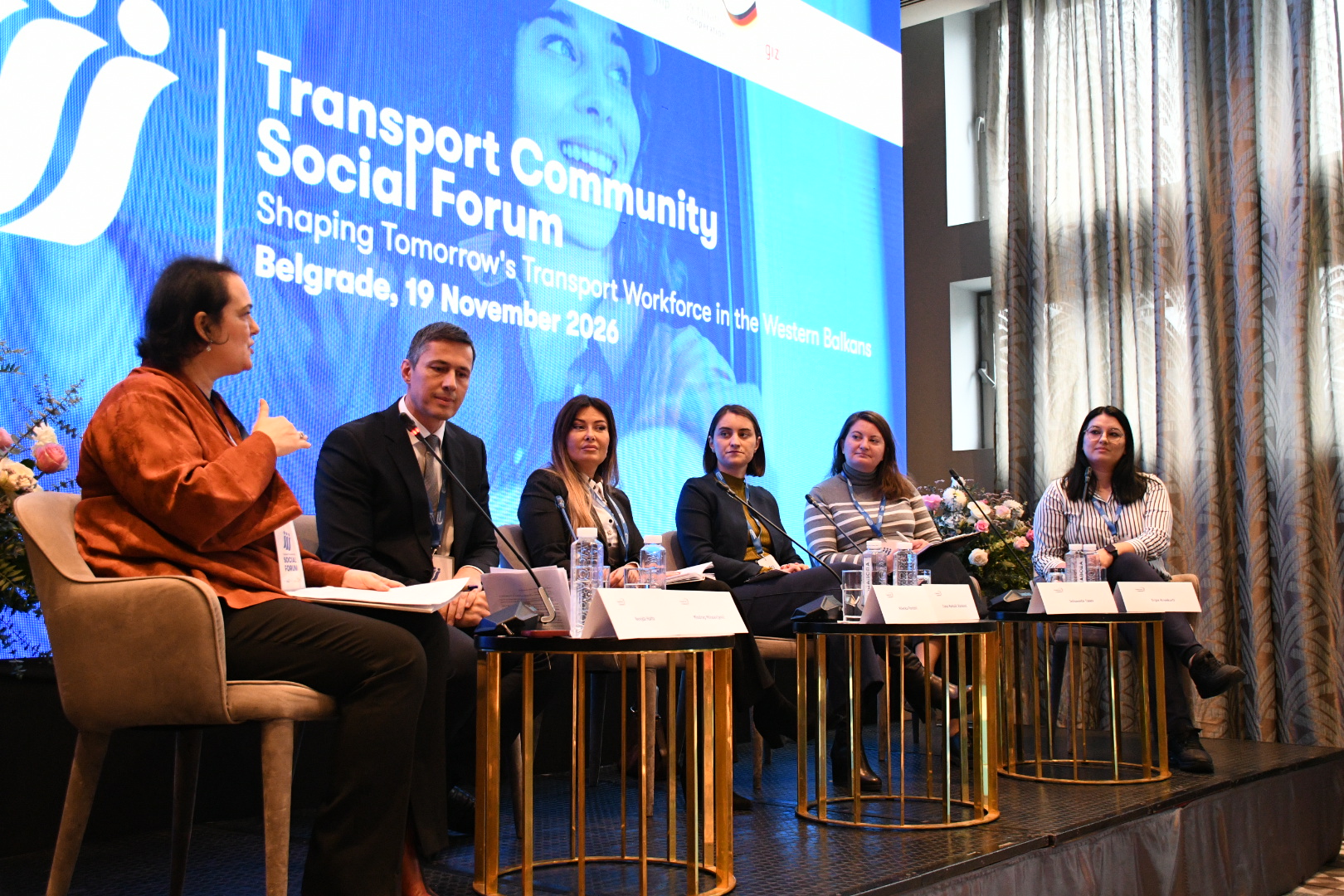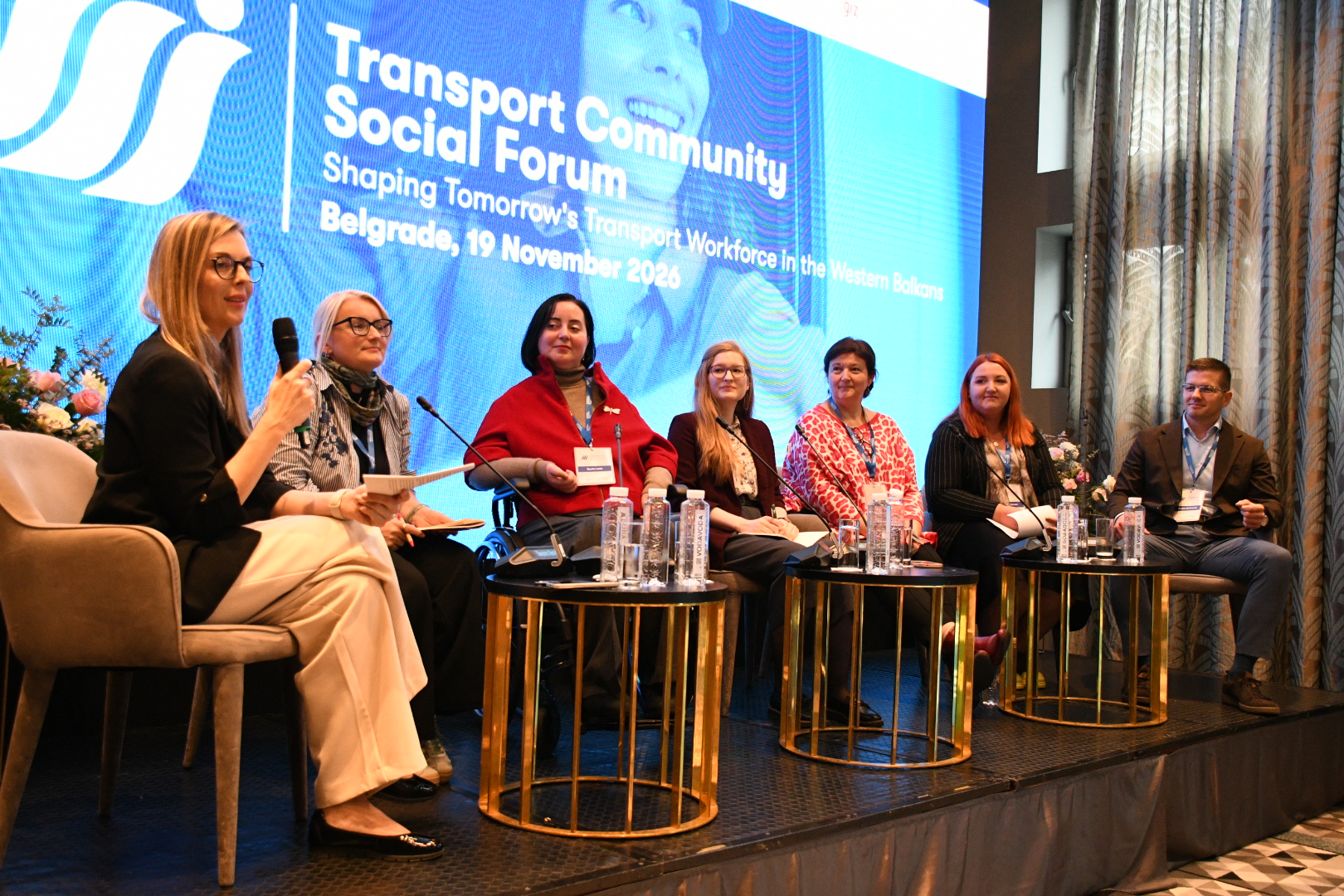
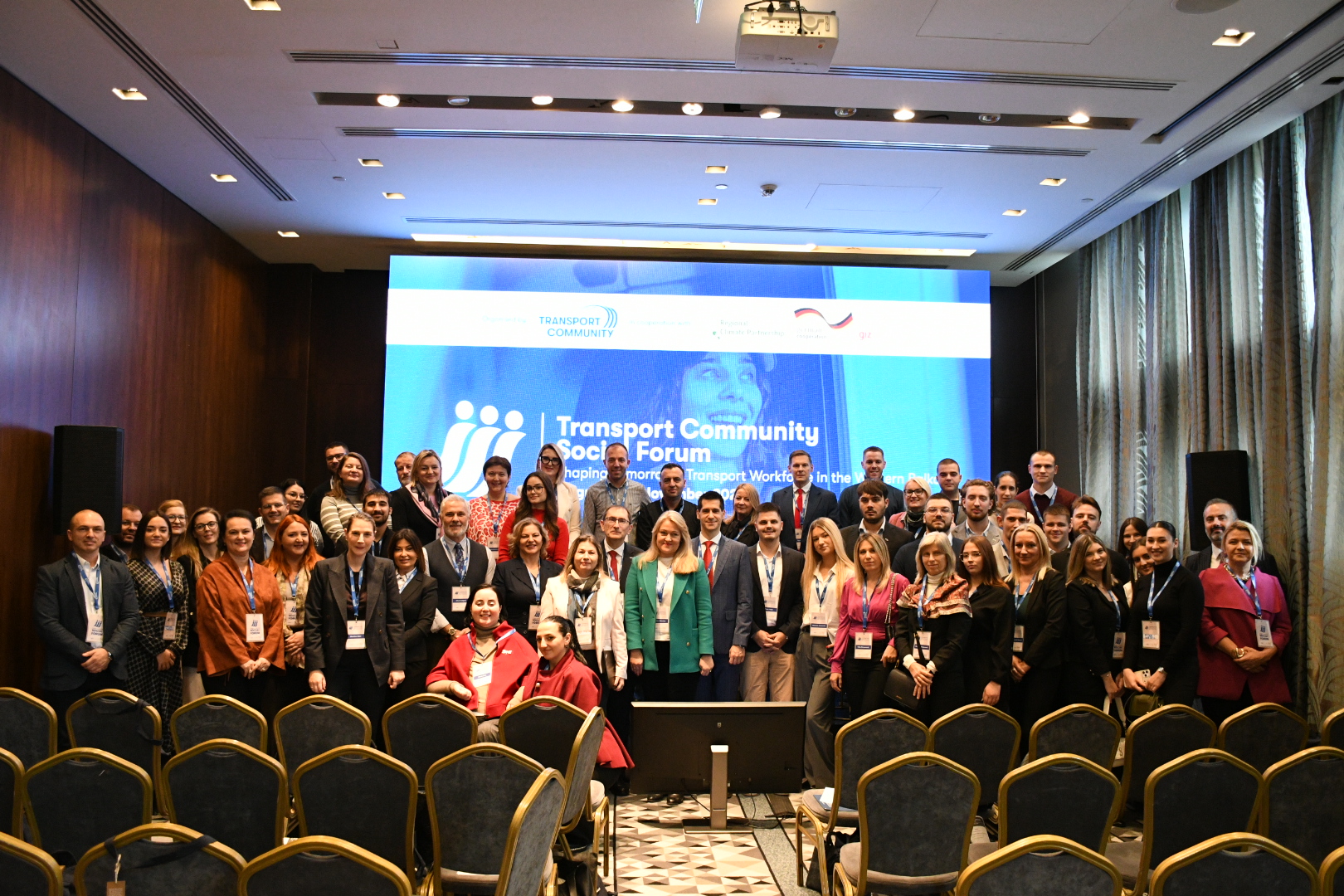
BELGRADE – Who will build, operate and manage tomorrow’s transport systems, and what would make a young person choose a career in transport? These questions guided the Transport Community’s 7th Social Forum, which took place on 19 November 2026 in Belgrade under the theme “Shaping Tomorrow’s Transport Workforce in the Western Balkans”.
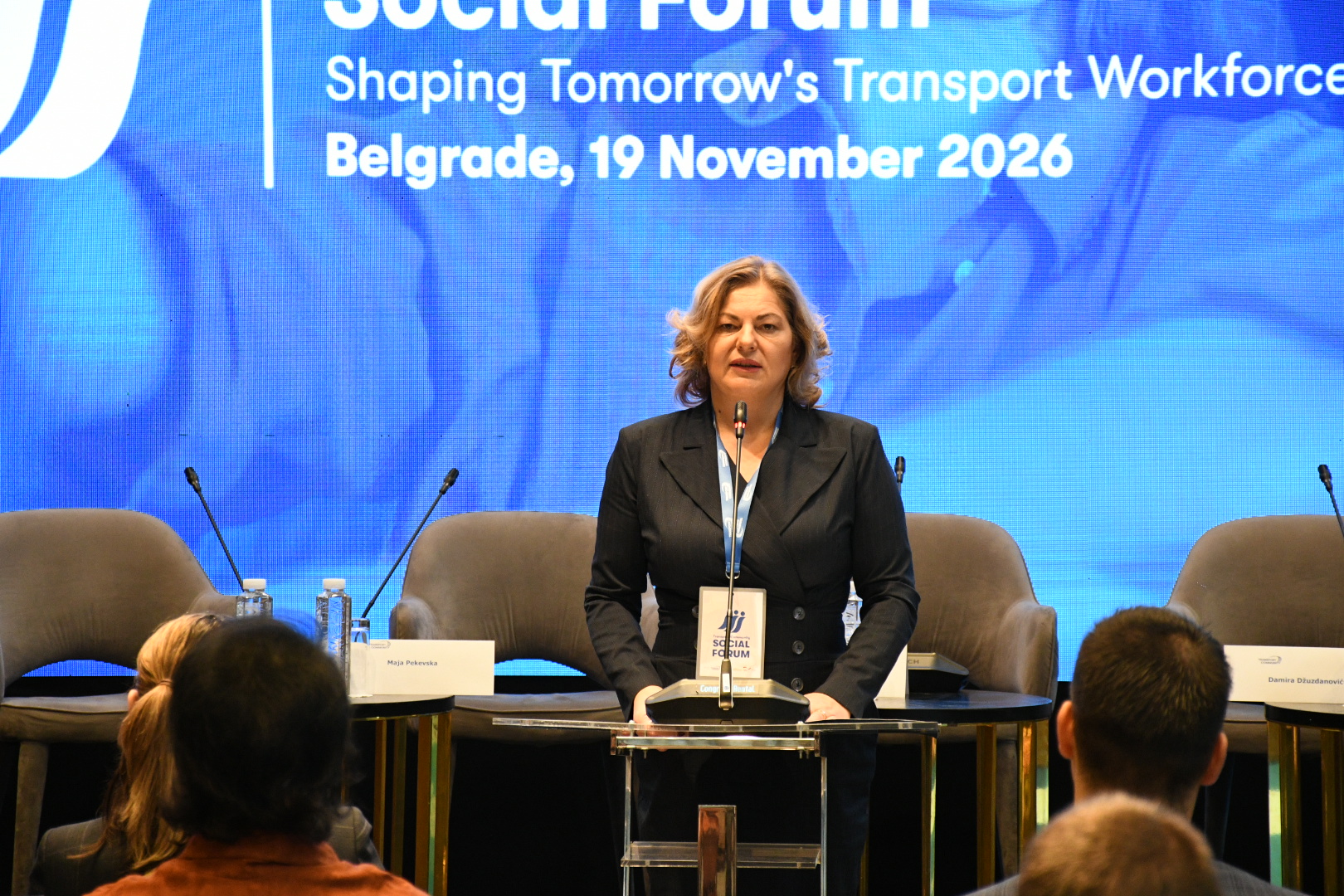
Tālis Linkaits, Director of the Permanent Secretariat of the Transport Community, Emeše Lalić Urban, State Secretary at Serbia’s Ministry of Construction, Transport and Infrastructure of Serbia, and Baiba Miltoviča, President of the European Economic and Social Committee’s Transport Group, opened the Forum.
“A new railway line needs qualified engineers, technicians and maintenance personnel. Modern roads require professionals capable of managing increasingly complex systems. Digitalisation and cleaner technologies are creating new professions and transforming existing ones. Behind every successful transport investment is a workforce prepared to operate and maintain it for decades to come,” Linkaits said.
He added, “The future of transport in the Western Balkans will depend not only on the infrastructure we build, but also on the people we prepare, support and inspire.”
“The transport sector is changing rapidly. Digitalisation, automation and the green transition are bringing new requirements and creating a need for new knowledge and skills. Education and professional training must keep pace with these changes,” Lalić Urban pointed out.
“Cooperation between institutions and educational establishments is particularly important in this regard. The Ministry recognises the importance of building links with secondary transport schools and the Faculty of Transport and Traffic Engineering. Through such cooperation, we can better align education with the actual needs of the transport sector, promote practical training for pupils and students, and help young people prepare for future careers in transport,” she underscored.
“If we want a competitive, sustainable and resilient transport system, we must invest in the people who make it work. We need to attract new talent, provide opportunities for lifelong learning, ensure safe and fair working conditions, and create an environment in which everyone can develop their potential,” said Miltoviča.
“This is equally important for the European Union and the Western Balkans. As our transport systems become more interconnected, cooperation should extend beyond infrastructure and technical standards to include skills, employment and the social dimension of transport,” she underlined.
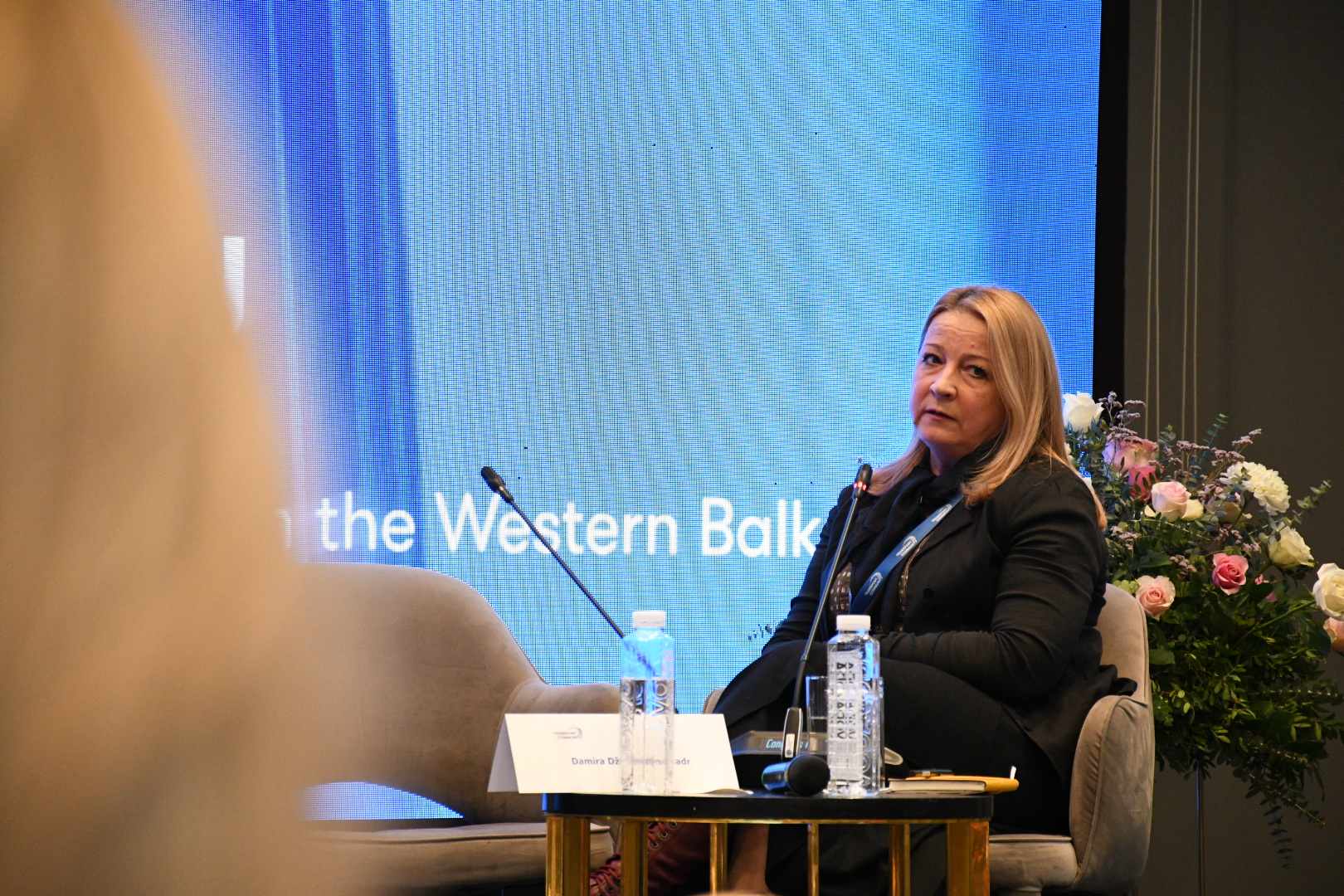
The first panel examined how digitalisation, decarbonisation, automation and demographic change were reshaping jobs in transport. Representatives of the European Commission, the University of Belgrade, road and rail authorities and the European Transport Workers’ Federation discussed which skills would be in demand and how employers, universities and vocational training providers could prepare people for these roles.
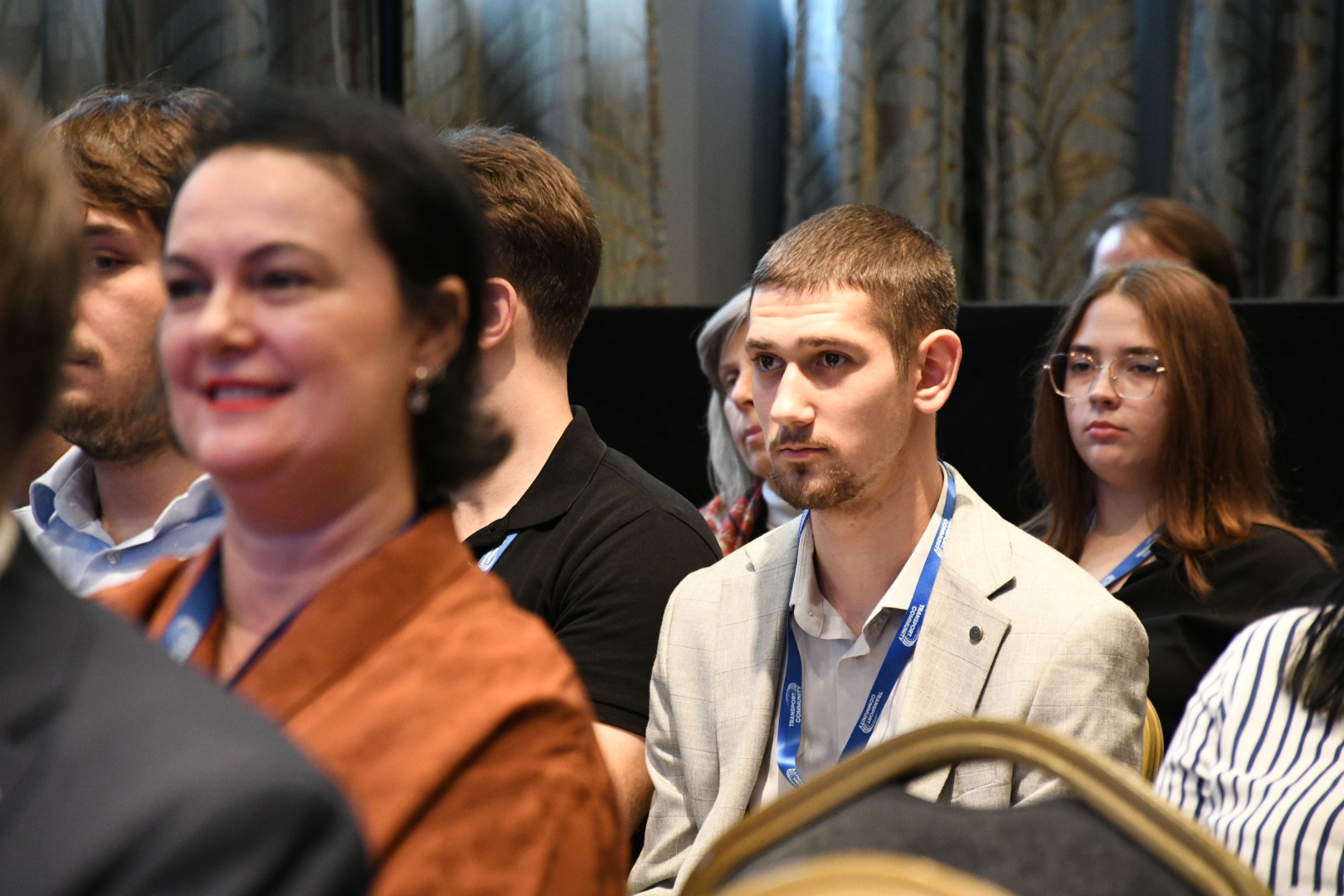
A session entitled From Classroom to Career – Young Voices in Transport introduced the second panel, which considered what attracted young people to transport careers and what encouraged them to stay. The discussion explored how employers and institutions could widen access to careers in the sector, advance gender equality and give workers a voice in decisions affecting their working lives.
The Forum also showcased six civil society projects supported through the Regional Twinning Initiative, launched by the Transport Community and Open Society Foundations – Western Balkans. Participants heard how partners in Albania and Montenegro were working to make public transport more inclusive for women and young people, how civil society organisations were promoting accountability in transport investment, and how disability rights advocates in Albania were advancing passenger rights.
The Transport Community recognised partners whose long-standing cooperation had helped bring workers, passengers and civil society into regional transport policy discussions. Director Linkaits closed the Forum with reflections on the next steps for regional cooperation.