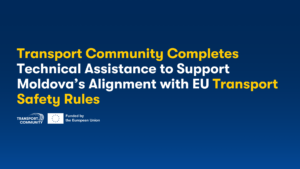
Main Beneficiary: Ministry of Infrastructure and Regional Development of the Republic of Moldova
Objectives: Technical Assistance Project for the Development of the ITS Strategy for the Republic of Moldova aimed to support the alignment of Moldova’s transport legislation, standards, and practices with the European Union. The overall goal was to enable a digitalized, safe, sustainable, and interoperable transport system.
Results: The project produced a complete and coherent ITS framework for Moldova, setting the foundation for implementation during 2026-2035:
- Comprehensive Diagnostic Report - First integrated assessment of Moldova’s ITS landscape, covering legislation, institutions, infrastructure, and EU alignment.
- National ITS Strategy and Action Plan - A unified vision for transport digitalization across all modes, supported by strategic and specific objectives aligned with EU policies and national priorities. The Action Plan translates this into implementation, including over 230 ITS projects, organized by transport mode and prioritized through a multicriteria methodology considering safety, efficiency, environmental impact, interoperability, and sustainability.
- High-Level National ITS Architecture - A structured conceptual and technical framework for ITS deployment, aligned with European methodologies (FRAME/FRAME-NEXT).
- Standard Technical Specifications (Road Sector) - Defined minimum requirements for ITS systems, including hardware, software, communication protocols, and testing procedures.
- ITS Legislative Package - A comprehensive legal framework (primary and secondary legislation) ensuring full transposition of EU ITS directives, covering all transport modes and key areas such as data exchange, cybersecurity, and governance. This included around 180 supporting documents, forming the legal basis for ITS implementation. A comprehensive legislative package comprising nine (9) legal acts aligned with EU Directive 2010/40/EU are available for full transposition in the Republic of Moldova.
- Institutional Capacity Building - Workshops and training sessions strengthened stakeholder coordination, knowledge, and governance capacity.
- Final Consolidation and Validation - The Final Report and workshop formalized results, confirmed institutional consensus, and presented the roadmap for national ITS roll-out.
Conclusions and next steps: To fully capitalize on these results, the recommendations are:
- Institutionalize ITS governance by clearly defining responsibilities
- Adopt the ITS Legislative Package in a phased, but decisive manner
- Strengthen human resource capacity in ITS
- Prioritise investments in line with the Action Plan
- Ensure mandatory integration of ITS components in all transport and mobility infrastructure projects, in accordance with established Technical Specifications and
- Establish a robust monitoring and reporting system