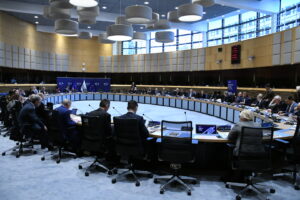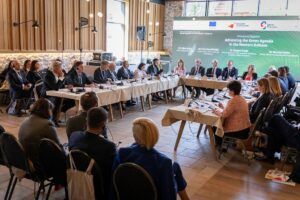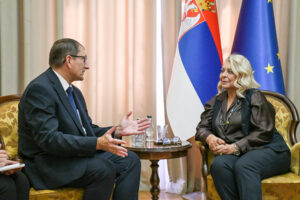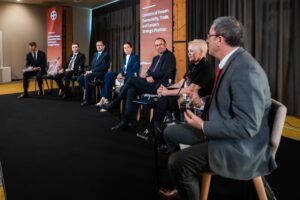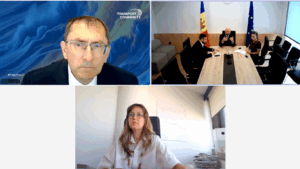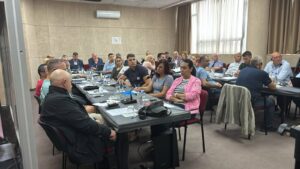

BRUSSELS – Ministers and senior officials from the Western Balkans, the European Union, Ukraine, and Moldova gathered on 5 December in Brussels for the 9th Meeting of the Ministerial Council of the Transport Community. The meeting reaffirmed the shared commitment to building a modern, safe, and fully connected transport system that supports growth, mobility, and EU integration across the region.
The session opened with remarks by Commissioner for Sustainable Transport and Tourism, Mr. Apostolos Tzitzikostas, the Albanian Presidency in Office, represented by Ms Enkelejda Muçaj, Deputy Minister at the Ministry of Infrastructure and Energy of Albania, and Director of the Permanent Secretariat of the Transport Community, Mr Matej Zakonjšek, who underlined the crucial role of transport in boosting competitiveness, improving daily life for citizens, and strengthening links with the European Union.
Commissioner Tzitzikostas underlined that this meeting of the Transport Community Ministerial Council comes at a pivotal moment. “Transport lies at the heart of the integration process and now is the time to deliver the essential reforms. The ambitious plans presented today by the Ministers of the Transport Community provide a solid foundation for turning this vision into reality,” he pointed out.
For the Presidency of the Ministerial Council, Deputy Minister Muçaj said: “This Council marks a pivotal moment for our region, as we collectively move closer to the European Union through enhanced transport integration. The Albanian Presidency is committed to supporting ambitious reforms, accelerating alignment with EU standards, and ensuring that connectivity delivers tangible results for our citizens. A well-connected transport space is not only about insfrastructure, it is a foundation for competitiveness, resilience, and shared prosperity.”
In his opening remarks, Mr Zakonjšek pointed out that the leaders present in the meeting sit around the table not as EU member states and candidates, but as equal partners shaping one European transport space. “We face similar challenges and opportunities. Transport flows do not see borders; they see connections, growth and new possibilities. Our work together reflects that simple truth,” he underlined.
The meeting focused on how to accelerate full alignment with EU transport standards as part of the EU accession process. Ministers reviewed the 2025 Progress Report on the implementation of the Transport Community Treaty Action Plans, covering both the Western Balkans and the observing participants (Georgia, the Republic of Moldova, and Ukraine).
Participants stressed the importance of ensuring that legislative progress translates into tangible benefits such as safer roads, more reliable railways, better services for passengers, and a more predictable environment for businesses.
The meeting also highlighted the importance of the extended Trans-European Transport Network (TEN-T) for the region’s development and transport integration. The 2025 TEN-T Development Report and the first draft Work Plan of the Western Balkans–Eastern Mediterranean Corridor were presented, outlining the next steps in developing modern, multimodal transport links between the Western Balkans, observing participants, and the European Union.
Ministers agreed that investments in efficient infrastructure, combined with clear planning and strong regional cooperation, are key to unlocking opportunities and improving connectivity.
Progress on the implementation of Green Lanes in the Western Balkans and the Solidarity Lanes between Ukraine, Moldova and the EU was reviewed. These initiatives continue to play a key role in keeping trade moving smoothly, cutting waiting times at borders, and strengthening Europe’s resilience in times of crisis.
Participants committed to further deepening cooperation to ensure seamless transport flows that support trade, mobility, and economic stability.
Ministers also endorsed the Next Generation Action Plan for Social Issues and Passenger Rights (2026–2028), which aims to strengthen fair working conditions, reinforce gender equality, and ensure strong protections for passengers across all modes of transport.
The conclusions of the 6th Social Forum of the Transport Community held in Tirana in April this year were also acknowledged as a milestone in advancing EU standards on passenger rights throughout the region.
Ministers discussed the ongoing challenges faced by Western Balkan transport operators when entering the Schengen area, highlighting the need for coordinated solutions that support smooth and predictable border crossings.
The meeting concluded with reaffirmed political will to strengthen transport integration and cooperation. The Ministerial Council adopted the Presidency Conclusions, which call for building a transport system that is safer, greener, and fully integrated into the EU’s transport market.