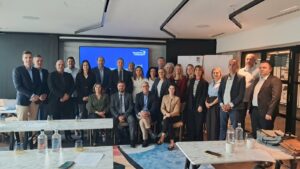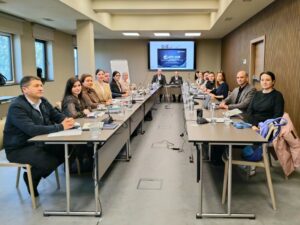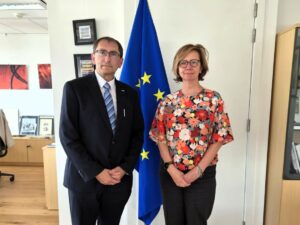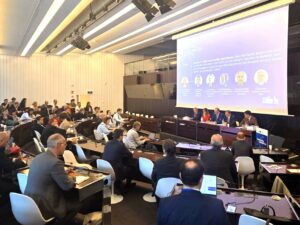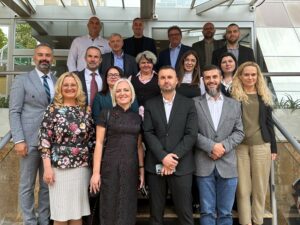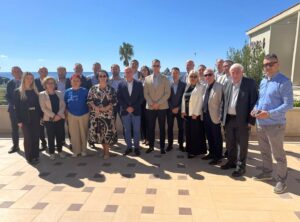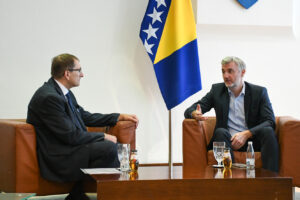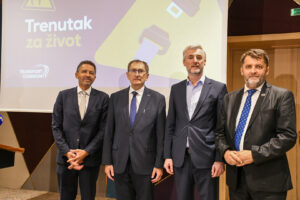
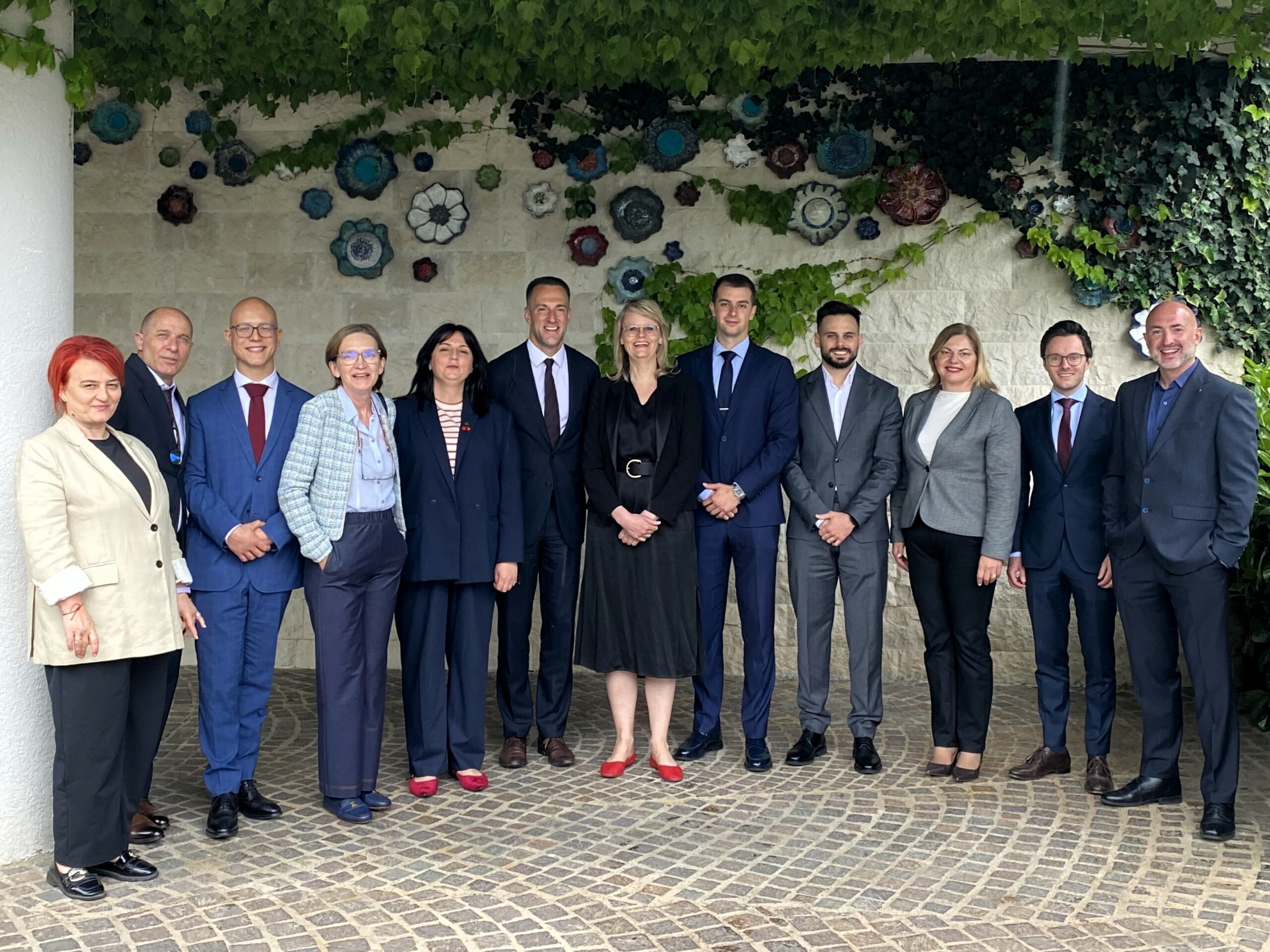
BUDVA – The Regional Steering Committee of the Transport Community convened on 8 May 2026 in Budva, Montenegro, for its 30th meeting, bringing together representatives of the Western Balkan partners, the observing participants, the European Commission, and the Permanent Secretariat to discuss the next steps in the region’s integration into the EU transport market.
The meeting focused on a broad reform and investment agenda, including road market liberalisation, Intelligent Transport Systems, eFTI and e-Freight, sustainable urban mobility, Green Lanes, road safety, emergency response, rail cooperation, and stronger coordination on transport legislation.
Speaking ahead of the meeting on behalf of the Presidency, Ms Erjola Muka, General Director of Transport Policies and Development of Infrastructure and Territory at the Ministry of Infrastructure and Energy of Albania, said: “Maintaining reform momentum remains a shared responsibility, requiring continued commitment to advancing alignment with EU standards, alongside a sustained focus on effective implementation, strengthened coordination, and steady, measurable progress across key priorities such as market opening, digital transformation, and sustainable mobility, ensuring that ongoing efforts translate into tangible and lasting results.”
Committee Co-Chair and Director for Policy Coordination in the Directorate-General for Mobility and Transport of the European Commission, Ms Mona Bjorklund, welcomed the growing momentum for transport reforms, including those being advanced through the respective accession processes and the Western Balkans Growth Plan. She stressed that the several technical assistance projects and policy roadmaps presented today reaffirm the Transport Community’s central role in supporting and advancing these efforts.
As this was the last meeting of the Regional Steering Committee attended by Mr Matej Zakonjšek in his capacity as Director of the Permanent Secretariat of the Transport Community, he thanked the members of the Regional Steering Committee for their cooperation over the past six years during his stewardship of the Secretariat. He added that the decisions and discussions in Budva would help move the region closer to the EU transport market and deliver concrete benefits for people and businesses across the Western Balkans.
The meeting endorsed the 2026–2028 Roadmap to road market liberalisation between the Western Balkan partners, aimed at supporting a more open, efficient and competitive regional road transport market. It also discussed progress on setting up National Access Points and National Bodies in the Western Balkans, as part of efforts to improve transport data governance and align the region with EU Intelligent Transport Systems standards.
The Regional Steering Committee members also addressed the Policy Framework and Roadmap on Sustainable Urban Mobility, supporting cleaner, safer and more accessible transport in cities across the region. In parallel, partners exchanged views on electronic freight transport information, e-Freight and the digitalisation of logistics, with a presentation by GIZ.
They reviewed the implementation of the Green Lanes Comprehensive Roadmap and the Safe and Sustainable Transport Programme, two initiatives aimed at reducing border waiting times, improving infrastructure, and supporting safer and more sustainable transport across the region.
Another important point was the Roadmap on 112 eCall and the Emergency Response Plan for the Western Balkans, designed to strengthen emergency response and improve road safety. The Committee was also informed about the establishment of an informal coordination working group for the Rail Centre of Excellence.
Furthermore, the meeting also discussed the state of play of the upcoming Transport Investment Summit to be held in Thessaloniki, Greece on 17-18 June 2026, the new Transport Community Communication Strategy, enhanced coordination on the review of draft transport legislation, and cooperation between the Connectivity Agenda Platform and the Transport Community.
Under the administrative part of the agenda, the meeting covered the 2025 budget execution, the Annual Operational Report 2025, the recruitment procedure for the Director and Deputy Director of the Permanent Secretariat, and the state of play of secondments at the Secretariat.
The Regional Steering Committee is the key decision-making body guiding the work of the Transport Community and supporting the progressive integration of the Western Balkans into the EU transport market.