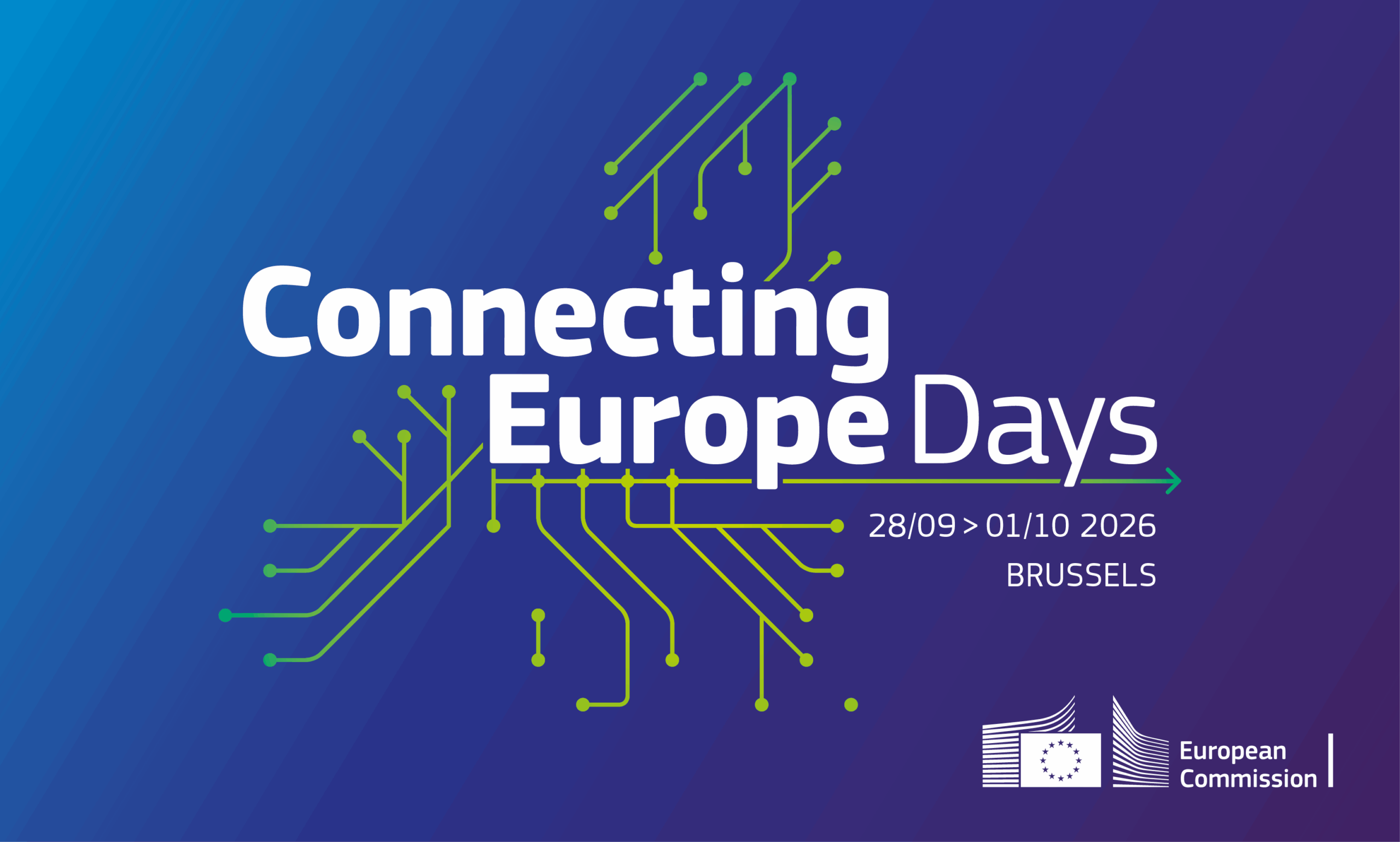
BRUSSELS – Europe’s transport future will be in focus in Brussels from 28 September to 1 October 2026, when policymakers, financial institutions, industry, transport professionals and stakeholders come together for Connecting Europe Days 2026, the European Union’s flagship mobility event.
Organised by the European Commission, this year’s edition will focus on how transport can strengthen Europe’s competitiveness, resilience, safety and sustainability, while supporting strategic autonomy, secure supply chains and stronger connections with partners beyond the European Union. The future of transport infrastructure funding and financing will also feature prominently in the discussions.
For the Western Balkans, Moldova and Ukraine, these discussions are particularly relevant. As they advance on their European paths and towards deeper integration into the European transport market, completing the Trans-European Transport Network (TEN-T), aligning transport standards and legislation with the EU acquis and mobilising investment for modern, safe and sustainable infrastructure are increasingly part of the same European agenda.
This connection will be directly addressed during the session “Connectivity as a driver of enlargement: Opportunities and challenges for a growing EU” on 30 September. The discussion will explore how transport connectivity can support successful EU enlargement, strengthen supply chains and competitiveness, and ensure that future Member States are properly integrated into the European transport system. Speakers include representatives of Albania and Montenegro, as well as Marian-Jean Marinescu, European Coordinator for the Western Balkans–Eastern Mediterranean European Transport Corridor.
The programme offers many other opportunities for transport authorities and professionals from the Western Balkans, Moldova and Ukraine to exchange knowledge and follow developments directly relevant to reforms underway across the region. Sessions will address TEN-T implementation and financing, rail modernisation and interoperability, road safety, intelligent and automated transport, sustainable urban mobility, alternative fuels, inland waterways, digitalisation, climate resilience and multimodal connectivity. Participants will also have an opportunity to see innovative EU-funded transport projects presented at a dedicated exhibition and Marketplace.
Moldova and Ukraine will feature prominently in discussions on the future of European rail connectivity. On 29 September, the session “Unifying Europe: Migrating to a common European railway gauge” will examine the transition towards the European standard railway gauge and the challenges and opportunities this presents for Ukraine and Moldova. Representatives will share experience and approaches to strengthening their integration into the wider European railway system.
On 1 October, Connecting Europe Days will also host a dedicated meeting of the Western Balkans–Eastern Mediterranean European Transport Corridor, led by European Coordinator Marian-Jean Marinescu. The Corridor connects the Western Balkans directly with the EU’s core transport network and provides an important framework for coordinating infrastructure development and improving cross-border connectivity.
Road safety cooperation will have a strong regional dimension as well. A joint event bringing together the European Road Safety Observatory, Eastern Partnership Road Safety Observatory and Western Balkans Road Safety Observatory will focus on improving road safety data collection and analysis, aligning methodologies and supporting evidence-based policymaking. The meeting, taking place on 1 October, will provide another opportunity to connect road safety work across the Western Balkans and the Eastern Partnership region. Participation in this meeting is by invitation only.
Connecting Europe Days therefore provides an important opportunity for institutions, infrastructure managers, transport operators, experts and other stakeholders from the Western Balkans, Moldova and Ukraine to engage with the policies, investments and partnerships that are shaping Europe’s transport system.
Partners from the Western Balkans, Moldova and Ukraine are encouraged to explore the programme and take part in Connecting Europe Days 2026.
Programme, practical information and registration are available on the European Commission’s official Connecting Europe Days 2026 webpage.