ZAGREB, SARAJEVO, SKOPJE, TIRANA – The Permanent Secretariat of the Transport Community welcomes the recent signing of two important agreements aimed at improving crossings points, facilitating trade and strengthening connectivity in the region.
The agreement between Croatia and Bosnia and Herzegovina, signed in Sarajevo by Prime Minister of Croatia, H.E. Mr Andrej Plenković and Chairwoman of the Council of Ministers of Bosnia and Herzegovina, H.E. Ms Borjana Krišto, represents a step towards more efficient movement of people and goods between Croatia and Bosnia and Herzegovina.
The agreement increases the number of highest-category border crossings, expands the number of international road border crossings for passenger and freight traffic, and further supports cross-border trade, tourism and investment flows.
It also provides the basis for further implementation of the CEFTA-TCT led EU- Western Balkans Green Lanes initiative, as it represents one of the preconditions for Bosnia and Herzegovina to be able to use the CONNECTA Technical assistance for project preparation, and subsequently apply for the funds under the Safe and Sustainable Transport Programme (SSTP), regarding the infrastructure needed by the inspections services at the new BCPs Gradiska and Svilaj.
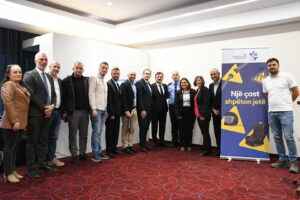
At the same time, the agreement between North Macedonia and Albania, signed in Peshkopi by Minister of Internal Affairs of North Macedonia, H.E. Mr Panche Toshkovski and Minister of Internal Affairs of Albania, H.E. Mr Besfort Lamallari, establishes a framework for joint border crossing points and joint border controls.
The agreement aims to facilitate the movement of passengers and goods, reduce waiting times, strengthen security and improve coordination and information exchange between the competent services.
It also represents a great step forward in implementation of the Transport Community’s New Generation Transport Facilitation Action Plan 2025-2027 as it foresees establishing joint controls at the busiest BCP Kjafasan/Qafethane which is part of the extended TEN-T Network and where investments in infrastructure improvements are being carried out.
Together, the two agreements show that border facilitation remains one of the most practical and visible areas of regional cooperation. For citizens, it means easier travel. For businesses, it means more predictable transport flows. For transport operators, it means less time lost at borders. For the region, it means stronger connectivity and closer integration with the European transport system.
The Transport Community has continuously supported measures that make border crossings faster, safer and more efficient, including stronger interinstitutional cooperation, joint controls, data exchange, improved infrastructure and the implementation of Green Lanes.
These agreements are therefore important steps in the right direction. They demonstrate that concrete cooperation between neighbours can deliver direct benefits for people, economies and transport systems.
The Transport Community will continue working with its regional partners, EU Member States and relevant institutions to advance border facilitation, remove bottlenecks and support a more connected, competitive and integrated region.