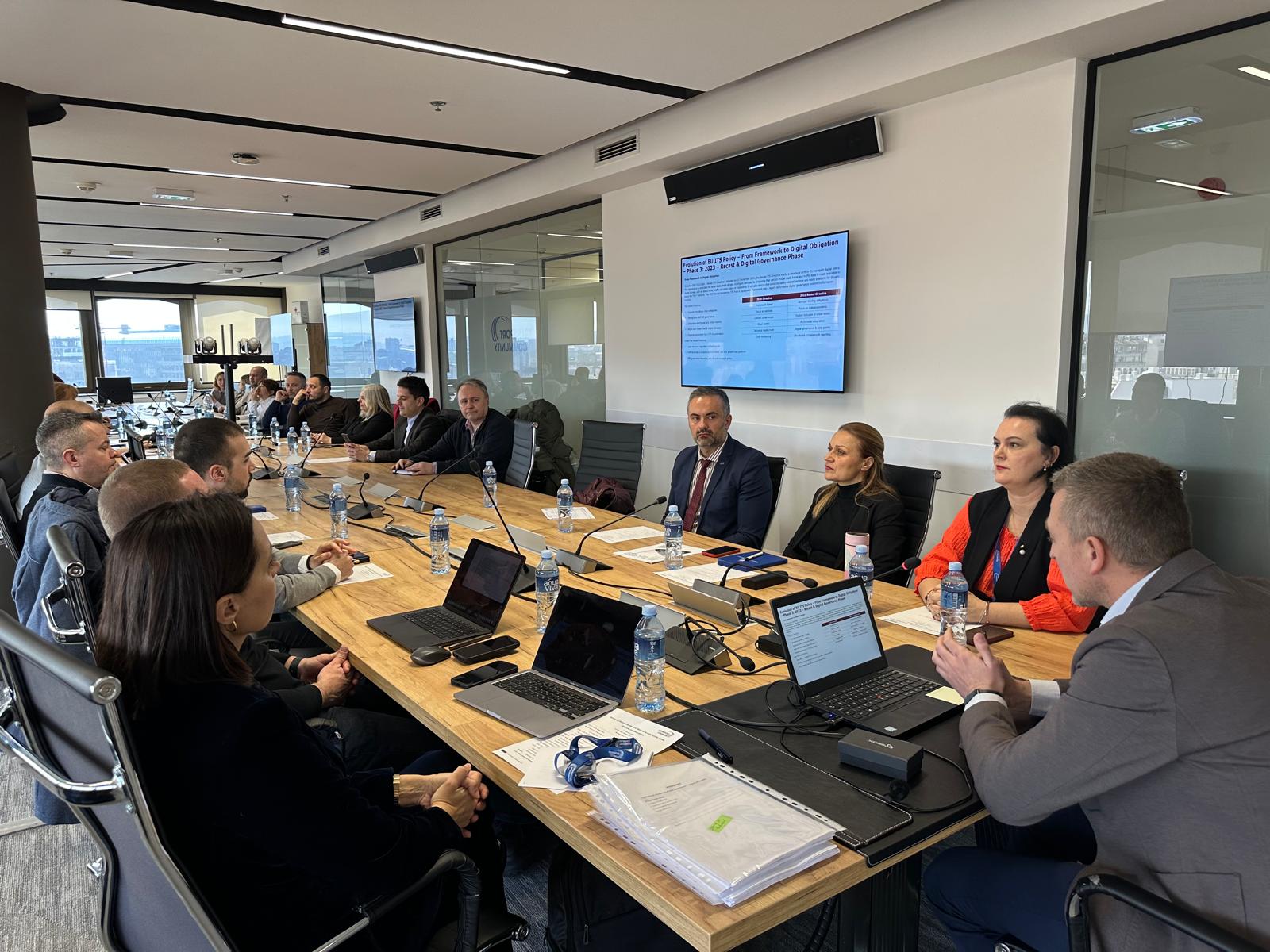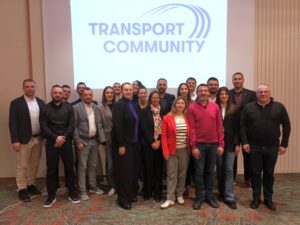
BELGRADE – On Friday, 27 February 2026, the Permanent Secretariat of the Transport Community organised a dedicated workshop in Belgrade focused on setting up National Body (NB) and National Access Point (NAP) for Intelligent Transport Systems (ITS) in Serbia. Hosted at the Transport Community premises, the event brought together institutions and experts to translate policy requirements into practical implementation steps.
The workshop builds on a study completed in December 2025 and supports the implementation of the EU Growth Plan Agenda, with a clear focus on institutional readiness, data governance, and interoperability.
Opening the event, Ms Ljuba Siljanoska, Deputy Director of the Permanent Secretariat of the Transport Community, underlined that ITS implementation is not only a technical obligation, but a core reform priority linked to connectivity, road safety, interoperability, and access to EU support.
Participants reviewed the EU ITS legal framework, including the link between Delegated Regulations and the requirements for National Bodies and National Access Points, alongside the latest developments in Serbia. Through a series of interactive, case-study based sessions, institutions mapped existing mandates, identified legal, organisational and technical gaps, and discussed overlaps or unclear responsibilities.
A central element of the agenda were two hands-on groupwork simulations reflecting real-life decision-making when establishing NBs and NAPs. These sessions enabled participants to propose quick wins, flag structural challenges, and assess readiness using a traffic-light approach across core functionalities, resources, and institutional responsibilities. Discussions also covered data categories and standards, priority datasets, hosting options, estimated costs, and capacity-building needs.
Throughout the day, emphasis was placed on the importance of clear institutional mandates, adequate resources, and effective coordination among stakeholders involved in ITS delivery. The guided wrap-up highlighted skills gaps, training needs, and indicative short- to medium-term milestones, helping chart a realistic pathway towards implementation.