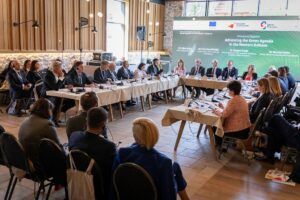
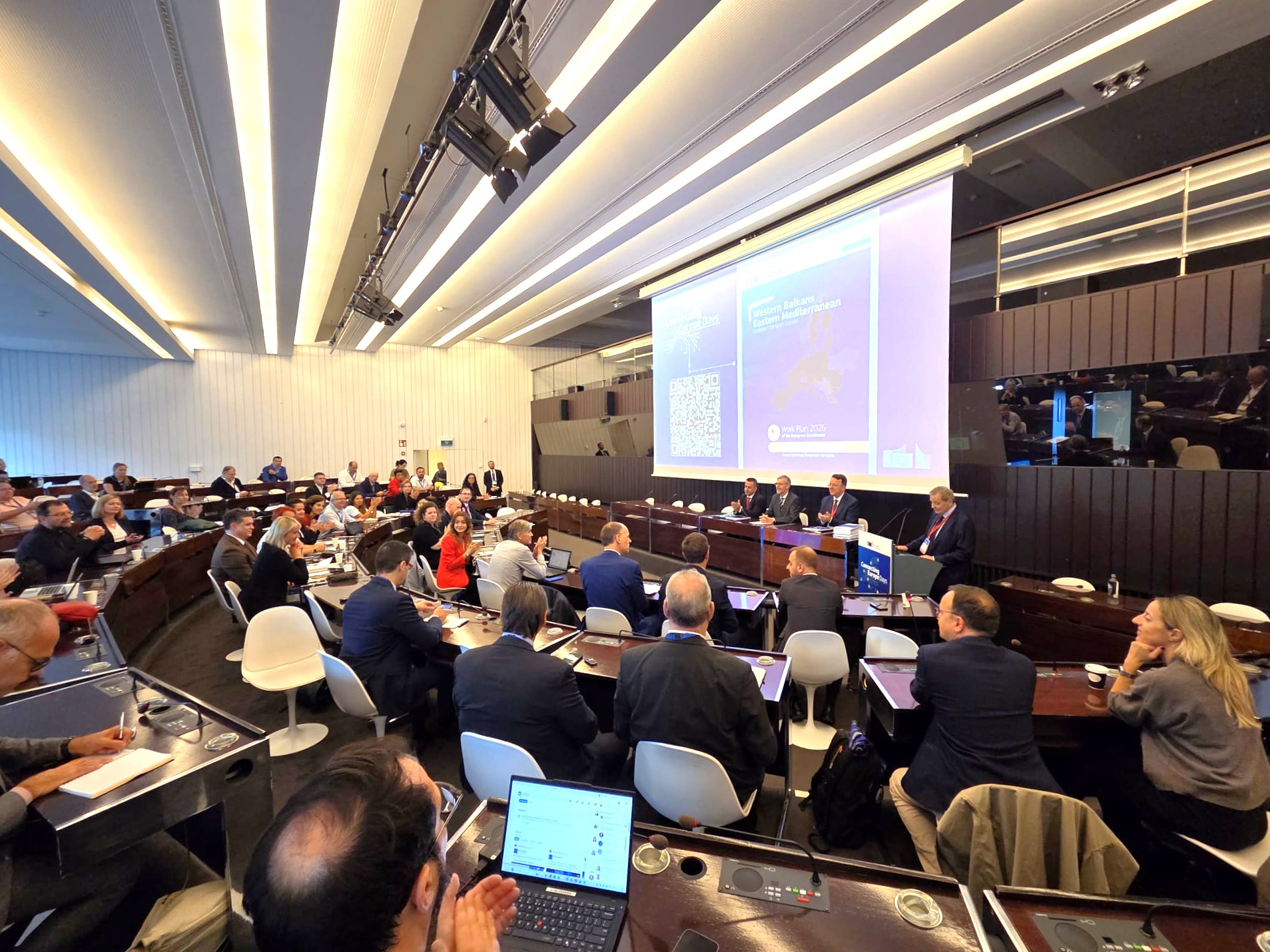
BRUSSELS – During Connecting Europe Days in Brussels, on 1 October 2026, key European transport leaders, institutional executives, and regional policymakers gathered for a dedicated session focused on advancing the Western Balkans–Eastern Mediterranean (WBEM) European Transport Corridor. Hosted and moderated by Marian-Jean Marinescu, European Coordinator for the WBEM Corridor, the session underscored the crucial role of the new WBEM Corridor Work Plan in seamlessly integrating the Western Balkans into the EU’s internal market through a modernised, interoperable transport network.
Participants emphasised that while substantial financial support from the European Union and the Western Balkans Investment Framework (WBIF) is available, overcoming non-physical administrative hurdles, prolonged border waiting times, and fragmented institutional coordination remains vital to realising the corridor’s full economic and strategic potential.
Opening the session, Marian-Jean Marinescu, European Coordinator for the WBEM Corridor, highlighted the transformative vision set out in the corridor’s updated roadmap. “The Work Plan for the Western Balkans–Eastern Mediterranean Corridor is not merely a strategic document; it is a binding blueprint for economic integration and regional resilience. To turn our vision of a fully interoperable network into reality, we must move beyond physical construction and dismantle the persistent cross-border bottlenecks that hinder daily movement. By deploying mandatory Implementing Acts and High-level agreements, we are establishing enforceable milestones that guarantee all partners move forward together,” he pointed out.
Delivering the Keynote Address, Robert de Groot, Vice-President of the European Investment Bank (EIB), emphasised the need to unlock the corridor’s potential by pairing robust EIB financing and strategic investments with structural reforms and efficient project delivery: “Unlocking the WBEM Corridor’s potential requires aligning robust capital investments with structural reforms. The EIB remains deeply dedicated to backing strategic rail and road connections across the countries in the region and with the EU. Financing achieves its maximum impact when backed by efficient project delivery to ensure that capital translates into tangible mobility improvements.”
Key political perspectives were provided during ministerial interventions by Aleksandar Nikoloski, Deputy Prime Minister and Minister of Transport of North Macedonia, and Dimal Basha, Minister of Infrastructure and Transport of Kosovo*. Underscoring the political weight of the initiative, Deputy Prime Minister Nikoloski noted that modernising cross-border links is essential to “ensure that our transport networks act as true drivers of growth and stability.” Minister Basha emphasised that: “Accelerating project delivery and technical interoperability is essential to bridging the infrastructure gap between EU Member States and Western Balkans partners. By embracing regional alignment, technical knowledge exchange, and streamlined procedures, we are turning our borders from logistical bottlenecks into drivers of network resilience and inclusive growth.”
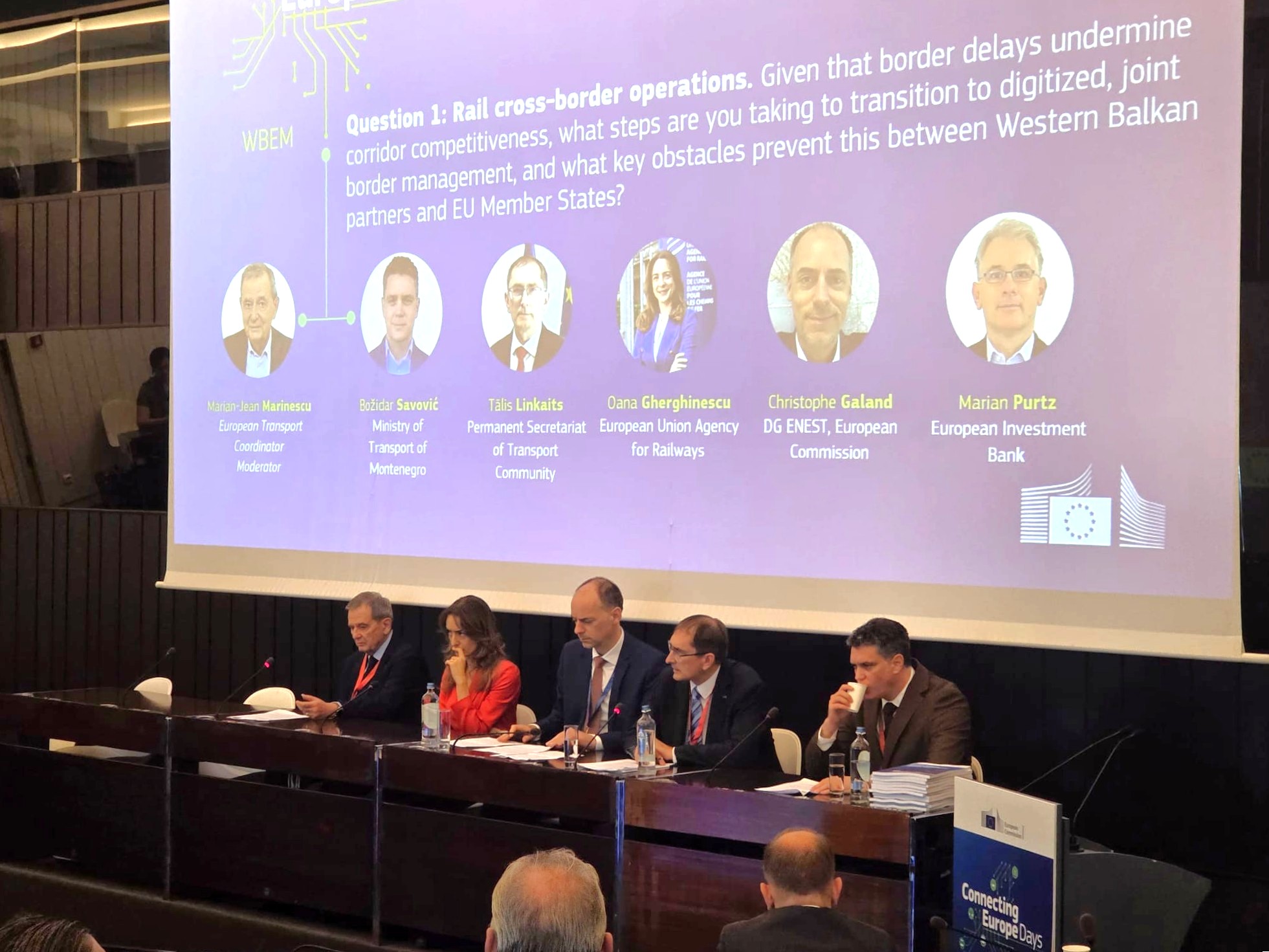
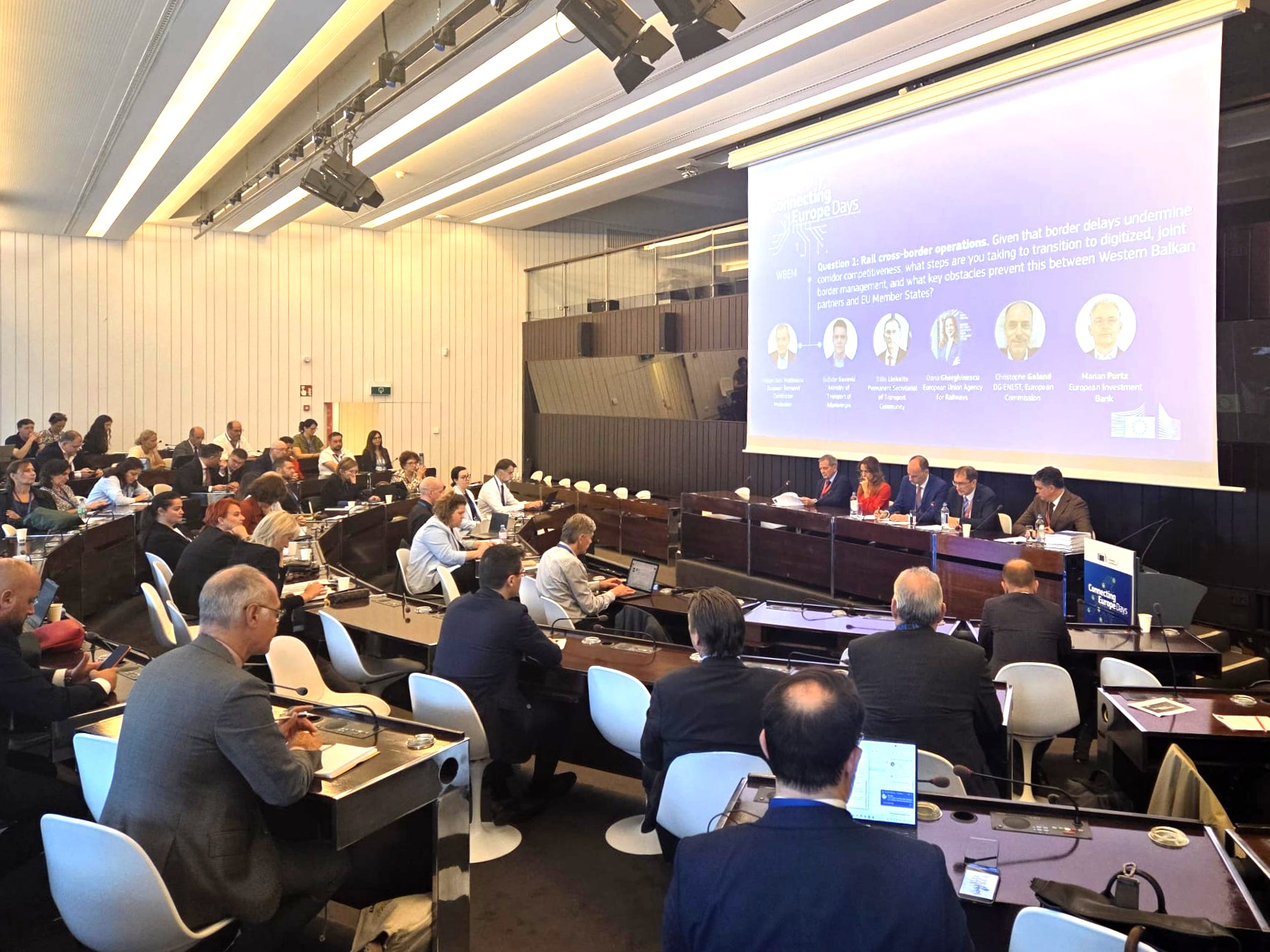
The panel discussion brought together high-level stakeholders to directly tackle the operational delays and administrative complexities that undermine corridor competitiveness.
Tālis Linkaits, Director of the Permanent Secretariat of the Transport Community (TCS), emphasised the necessity of political commitment for a single, connected network: “The Western Balkans-Eastern Mediterranean Corridor’s competitiveness depends on cutting border delays and delivering projects. We need joint rail border controls, shared digital systems and investments ready for construction. We must build on national political commitment with a shared regional and European vision: one connected network, not a patchwork. This commitment must translate into faster delivery and reliable connections with the EU.”
Božidar Savović, State Secretary of the Ministry of Transport of Montenegro, highlighted the perspective of Western Balkan partners and the importance of joint execution: “Modernising rail interconnectors along the WBEM Corridor is fundamental to our integration with the European market.”
Christophe Galand, Deputy Director at DG ENEST (Western Balkans Directorate), emphasised the strategic alignment between EU funding and regional reform: “Substantial financing is deployed across the region, but project velocity depends heavily on local governance, administrative readiness, and streamlined procurement.”
Oana Gherghinescu, Executive Director of the European Union Agency for Railways (ERA), emphasised technical interoperability and safety standards: “Cross-border cooperation between national stakeholders along the corridor and with the EU institutions is key to guarantee interoperability by design, with a cross-border mindset, and looking at the end purpose of seamless operation. Infrastructure is only one part of the equation, but the end result should be seamless border crossing and effective rail investment. ERA stands ready to continue our long-lasting support to countries and stakeholders, in close cooperation with the WBEM Corridor, the Transport Community, the European Commission, and the EIB.”
Marian Purtz, EIB Coordinator for the WBEM Corridor, highlighted financial coordination and execution.
The session concluded with an interactive Q&A session involving transport stakeholders, industry representatives, and financial institutions. In his closing remarks, Coordinator Marinescu reaffirmed that future progress will be measured through concrete implementation milestones and reinforced governance mechanisms to ensure seamless cross-border connectivity across the Western Balkans and Eastern Mediterranean regions.
_______
* This designation is without prejudice to positions on status, and is in line with UNSCR 1244/1999 and the ICJ Opinion on the Kosovo declaration of independence.